
All who come into being as flesh
pass on, and have since God walked the earth;
and young blood mounts to their places.
The busy fluttering souls and bright transfigured spirits
who people the world below
and those who shine in the stars with Orion,
They built their mansions, they built their tombs-
and all men rest in the grave.
So set your home well in the sacred land
that your good name last because of it;
Care for your work in the realm under God
that your seat in the West be splendid.
The waters flow north, the wind blows south,
and each man goes to his hour.
So seize the day! hold holiday!
Be unwearied, unceasing, alive,
you and your own true love;
Let not your heart be troubled during your sojourn on earth,
but seize the day as it passes!
Put incense and sweet oil upon you,
garlanded flowers at your breast,
While the lady alive in your heart forever
delights, as she sits beside you.
Grieve not your heart, whatever comes;
let sweet music play before you;
Recall not the evil, loathsome to God
but have joy, joy joy and pleasure!
O upright man, man just and true,
patient and kind, content with your lot,
rejoicing, not speaking evil –
Let your heart be drunk on the gift of Day
until that day comes when you anchor.
Translated from the Egyptian by John L. Foster
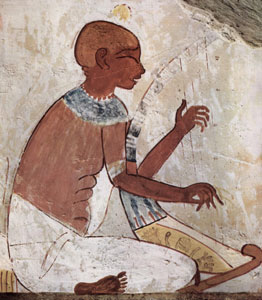 Anonymous, 1160 BC The Song of the Harper was inscribed on many tombs in ancient Egypt and often accompanied by the image of a blind harper, who, it is thought, played and sang during the mortuary rites. This poem was found at the tomb of Inherkhawy, a foreman in charge of workmen at the royal necropolis during the reign of Rameses III.
I enjoy reading ancient poetry because it reminds me of that all men and women share the ‘human experience’. People who lived two, three, four thousand years ago felt the joy and sorrow of love as we do; experience the fear and mystery of death as we do; and made peace of some kind with the brevity of life.
The anonymous author of this poem advises us that joy and gratitude for the gift of life are the best responses for each of us will leave this world at our appointed hour.
The waters flow north, the wind blows south,
and each man goes to his hour.
Let your heart be drunk on the gift of Day
until that day comes when your anchor.
 Remembering the Sacred Self
What a beautiful poem. This one is worthy of memorization for passage meditation. I keep getting tripped up on the last line though: “Until that day comes when your anchor…” it seems that there should be a verb after “anchor”–like “when your anchor is lifted and your soul is borne aloft” for example. Can you shed some light on the last line? Thanks as always for sharing the beautiful words that you’ve discovered on your sacred journey.
LikeLike