
And pausing before one who was blind and furthermore had lost a limb, I pondered. So old, so near the grave was he, groaning like a rusty mill-wheel when he moved, and halting in his speech, for he was full of years and the light of words had grown dim for him – yet ever he was becoming more luminous, brighter, apter for the task for which he had made the barter of himself. With trembling hands he continued perfecting his fretwork, which had become for him as an elixir, ever subtler and more potent. Thus, escaping by a miracle from his gnarled old flesh, he was growing ever happier, more and more invulnerable. More and more imperishable. And, dying, knew it not, his hands being full of stars.
The Wisdom of the Sands by Antoine de Saint-Exupery
Like most people I discovered the writing of Saint-Exupery when I read his classic, The Little Prince, to my children. How I loved that book – in fact, I was never able to finish reading it aloud because I always began weeping when the fox told the Prince how to tame him.
Then I discovered that Saint-Exupery had written other books for adults and in France, his native land, was something of a legend for he was one of the early pioneers in aviation and flew his tiny plane across the Mediterranean, Middle East and South America delivering the mail.
The Wisdom of the Sands quoted above distills Saint-Exupery’s philosophy through a parable-like story of a desert king. Some critics liken it in imagery and tone to Nietzche’s Thus Spake Zarathustra; it reminds me of Kahlil Gibran’s The Prophet, except denser and more complex.
Andre Gide, in his preface to Saint-Exupery’s earlier book Night Flight wrote: “The quality which I think delights me the most … is its nobility …. I am especially grateful to Saint-Exupery to bringing out a paradoxical truth…: that man’s happiness lies not in freedom but in his acceptance of a duty.”
These are the very qualities I also most admire in Saint-Exupery – his sense of responsibility, of duty, of commitment; perhaps because these are qualities I have struggled with in my own life – duty to the self and to the Other.
If you are called to be a street sweeper, you should sweep streets even as Michelangelo painted, or Beethoven composed music, or Shakespeare wrote poetry…. Martin Luther King, Jr.
In The Wisdom of the Sands responsibility and duty are explored through the metaphor of kingship. In the passage above, the old man is near death yet keeps on working and through this dedication transforms duty into illumination. By fulfilling his dharma, as the Buddhists say, he transformed his life into a spiritual path. He fulfilled his purpose.
I always feel a catch in my throat when reading the final words, “And, dying, knew it not, his hands being full of stars.” There is great dignity in that picture, great nobility of spirit.
When I work, I leave my body outside the door, the way the Moslems take off their shoes before they enter a mosque… Pablo Picasso
But many of us, myself included, may spend many years intellectualizing, “what is my purpose?” and at the same time ignoring what is right in front of us. Our egos like the idea of being called to some great and worthwhile destiny – to save the whales, to feed the hungry, to clothe the poor, to heal, etc., etc. All of these are noble purposes but are they ours? Can we save the world before we save ourselves?
What is in front of us today, right this minute? To sweep the floor, to take an older relative shopping, to call a sick friend, to make dinner for our family, to work for our boss, to change a tire, to sing a song. Perhaps dharma, our purpose, is not so much what we should do or might do, but what we can do right now.
Like the old carpenter above, we may not be called to any great undertaking in worldly terms but we can approach our tasks with great spirit, with great dedication and love and thereby make our work holy. It isn’t what we do, it is the attitude in which we do it. It is not the esteem in which our work is held, it is the esteem in which we hold our work.
While the unwise work for the fruit of their actions the wise offer all results of their actions to Me. Bhagavad-Gita
In modern physics they talk about how a butterfly flapping its wings in a garden may be affecting the life of a star across the galaxy. That is how interconnected we are in the web of life. So when you or I ‘do our duty’ we can, indeed, be saving the world although unknowingly. It is not for us to understand the Great Mysteries at this time. It is sufficient that we participate in them by dedicating ourselves to our duty.
Work is empty save when there is love. And when you work with love you bind yourself to yourself, and to one another and to God…. Kahlil Gibran
-
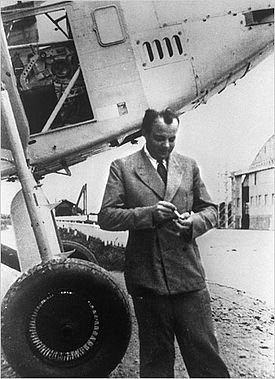
 Selected works of Antoine de Saint-Exupery
Aristocrat, writer, poet & pioneer aviator 1900-1944
Southern Mail, 1929
Night Flight, 1931
Wind, Sand and Stars, 1939
Flight to Arras, 1942
The Little Prince, 1943 (posthumous)
The Wisdom of the Sands, 1948 (posthumous)
(There are new posts on my other blogs at http://marietaylorink.com and http://marietaylorart.wordpress.com)
 Remembering the Sacred Self
Good question: can you save the world before we save ourselves? At one level, it is important to remember that we are world too, and so caring for the self is caring for the world and caring for the world is caring for the self.
LikeLike
I think it was Mohammed who said, “The world too is God.” It is our belief in separation that brings us sorrow. Thanks for commenting. Marie 🙂
LikeLike